
What Does AI Orchestration Mean for Content Intelligence in B2B Marketing?
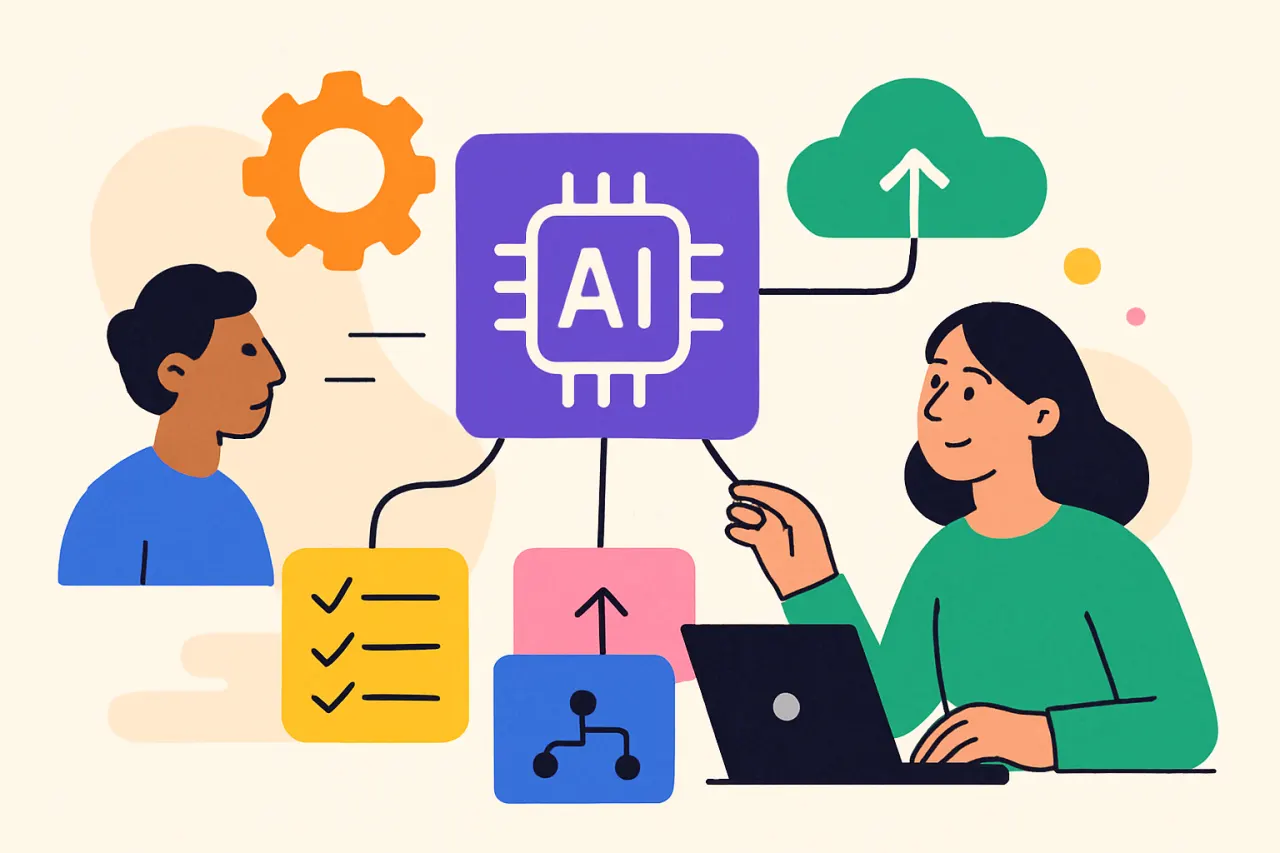
AI orchestration refers to the coordinated deployment and management of multiple AI models and agents within a single integrated content workflow.
This goes beyond using a single AI model or standalone AI tools. For content intelligence, it means that data analysis, content creation, optimization, and distribution work seamlessly together under a central management system. This creates scalable, controlled, and efficient AI-driven content production aligned with complex business objectives.
This approach is crucial for enterprise AI environments where multiple teams, technologies, and data streams converge.
AI orchestration enables the combination of various AI capabilities—such as natural language processing, SEO analysis, and behavioral data—and leverages them cohesively for better content decisions.
Why a Generic View of AI Falls Short for Strategic Marketing Teams in Content Intelligence
Many organizations treat AI in content intelligence as a standalone tool or single technology.
This leads to fragmented workflows, inconsistent content quality, and limited scalability. The misconception is that one AI model or isolated AI solution is enough to meet complex content needs.
In reality, effective content intelligence requires a holistic approach that considers:
- The diversity of content types and channels
- The need for continuous optimization based on real-time data
- Governance and compliance within enterprise environments
- The integration of human expertise with AI-driven processes
AI orchestration addresses these challenges by providing a coherent framework where different AI agents collaborate, resulting in more consistent, scalable, and measurable content outcomes.
Four Dimensions of AI Orchestration That Define Why It’s the Future of Content Intelligence
To grasp the practical value of AI orchestration, we distinguish four essential dimensions marketing teams should evaluate:
- Integration and collaboration between AI agents: Multi-agent AI enables teams to combine specialized AI models for research, creation, optimization, and distribution. This prevents silos and accelerates workflows.
- Governance and control: Enterprise AI demands strict rules for data usage, quality monitoring, and compliance. AI orchestration offers a central control point to manage risks and ensure consistency.
- Adaptability and scalability: AI marketing requires dynamic adjustment to changing market and customer insights. Orchestration allows AI capabilities to be flexibly scaled and adapted without disruption.
- Transparency and measurability: For effective content intelligence, insight into AI decisions and performance is essential. Orchestration facilitates reporting and audit trails that build trust and support optimization.
Together, these dimensions form a practical evaluation framework for marketing teams looking to invest in AI-driven content strategies.
How Argusly’s Experience Demonstrates the Practical Application of AI Orchestration in Content Workflows
Argusly supports enterprise content teams with an API-driven platform that facilitates AI orchestration, including for WordPress and Laravel environments. Our experience shows that combining different AI agents within one workflow leads to:
- Faster content research and briefing through automated data analysis and topic clustering
- Consistent AI-assisted content creation that maintains tone of voice and brand guidelines
- Real-time SEO optimization by integrating analytics and content performance monitoring
- Improved governance through centralized management of AI outputs and compliance checks
These practical examples highlight that AI orchestration is not abstract but a directly applicable approach that generates measurable business impact.
Why AI Orchestration Goes Beyond Traditional Content Tools and Isolated AI Initiatives
Many content teams rely on traditional tools or isolated AI functions, such as a single AI copywriter or SEO analysis tool. This often leads to inefficiencies, inconsistencies, and limited scalability. AI orchestration stands out by offering:
- End-to-end workflow integration: From content planning to publication and analysis, everything is connected through collaborating AI agents.
- Multi-agent collaboration: Different AI models complement each other and prevent teams from getting stuck with one technology.
- Enterprise-grade governance: Managing AI-driven content with attention to compliance, data privacy, and quality standards.
- Strategic flexibility: The ability to quickly adapt AI capabilities to changing marketing goals and market conditions.
These features make AI orchestration a future-proof solution for content intelligence in complex B2B environments.
Decision Criteria for Marketing Teams When Implementing AI Orchestration in Content Intelligence
Marketing leaders and content managers should evaluate AI orchestration based on concrete criteria that weigh business impact and risks. Key considerations include:
- Complexity of content processes: How many different content types, channels, and teams are involved?
- Current AI initiatives: Are standalone AI tools already in use, and how well do they integrate?
- Governance requirements: What compliance and quality standards apply within the organization?
- Scalability and flexibility: How quickly must AI capabilities grow with the business?
- Technological infrastructure: Does the existing stack support API integration and multi-agent collaboration?
A phased implementation is recommended, starting with a pilot that connects AI agents in a controlled workflow. This allows room to learn, manage risks, and validate the business case before a large-scale rollout.
Strategic Actions Marketing Teams Can Take After Understanding AI Orchestration for Content Intelligence
After grasping the practical dimensions and benefits of AI orchestration, marketing teams can take the following steps:
- Evaluate current content workflows: Identify bottlenecks and opportunities where AI agents can improve collaboration.
- Inventory AI capabilities: Map out which AI tools and models are already in use and how they can be integrated.
- Develop an orchestration roadmap: Create a plan for phased integration, including governance and measurability.
- Engage stakeholders: Involve IT, compliance, and content teams to ensure buy-in and collaboration.
- Continuous monitoring and optimization: Use data and feedback to continuously improve AI agents and workflows.
With this approach, teams can effectively leverage AI orchestration as a strategic lever for content intelligence, delivering measurable impact on efficiency, quality, and compliance.
Related reading: From AI Chatbot to AI Orchestration: The Next Step for Marketing Teams.